
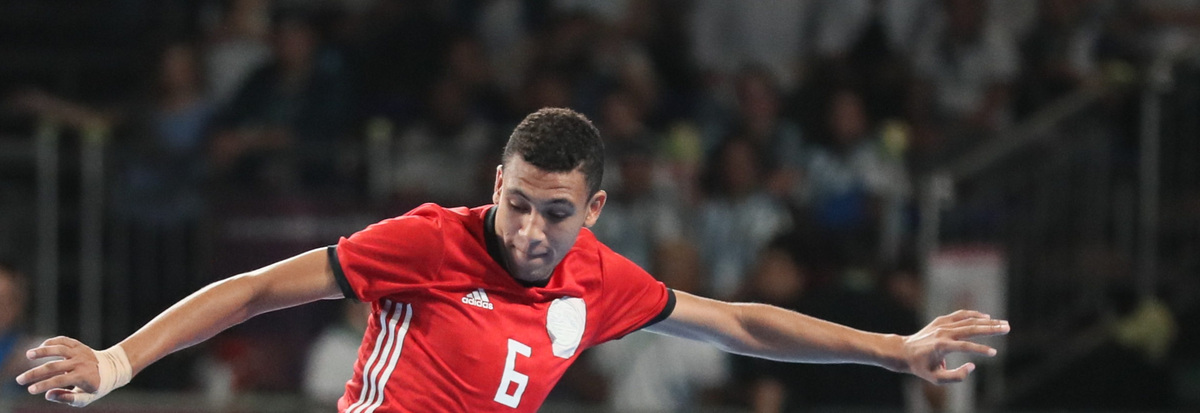
Archive photograph: Egypt’s youth team against Argentina at the Buenos Aires Youth Olympics on 18 October 2018.
The scoreboard still shows a minute, but the ball has just gone out. In futsal, that minute does not tick away while players wait for the restart. To understand the closing seconds, you need to distinguish playing time from time spent in the arena.
When the ball is out, the clock stops
FIFA’s Laws set the standard duration at two periods of twenty minutes of effective playing time. The timekeeper stops the clock when the ball is out of play and restarts it after a correct restart. A ball going out or a referee’s stoppage therefore does not use up the displayed seconds.
The scoreboard measures playing time, not the full duration of the event. Stoppages and half-time extend the elapsed time. Simply adding forty minutes to kick-off would give a misleading estimate of when the match ends.
One minute can include several passages of play
Take a fictional example: one minute remains, then the ball goes out for a kick-in. The clock stays stopped until play restarts correctly. If the ball goes out again, it stops again. That last minute adds together passages of active play; it does not necessarily equal the next minute on your watch.
For spectators, this changes the meaning of a late stoppage. The team still has the full time shown on the scoreboard. Follow restarts and remaining time together rather than treating interruptions as time already lost.
The buzzer and its exceptions
The timekeeper’s buzzer normally ends the period. FIFA does, however, provide for a penalty or a direct free kick awarded from the sixth accumulated foul near the end to be taken. The period then ends under the execution conditions set out in the Laws.
These are FIFA’s general rules. Shorter periods may be used where regulations allow them. This guide does not certify adaptations in a particular competition. To explore the teams at an African tournament, our 2026 Futsal AFCON group guide offers another way into the sport.
SourcesFIFA Futsal Laws of the Game 2025/26, effective 5 September 2025: Laws 6 and 7, pp. 56 and 60–61. FFF, Developing futsal in your area, 4 April 2024: explanation of effective playing time. The Loire/FFF refereeing page 2026/27 references FIFA’s 2025/26 edition. Sources checked on 5 October 2026; exact upload dates for the FIFA PDF and refereeing page were not displayed.
Archive photograph: Argentina–Egypt, Buenos Aires Youth Olympics men’s tournament, 18 October 2018. U18 category confirmed by FIFA on 19 October 2018. Photo: Sandro Halank, Wikimedia Commons, CC BY-SA 4.0. Photograph adapted under the same licence: cropped and resized.
Source: Sport News Africa.
Read the original and its updates on SNA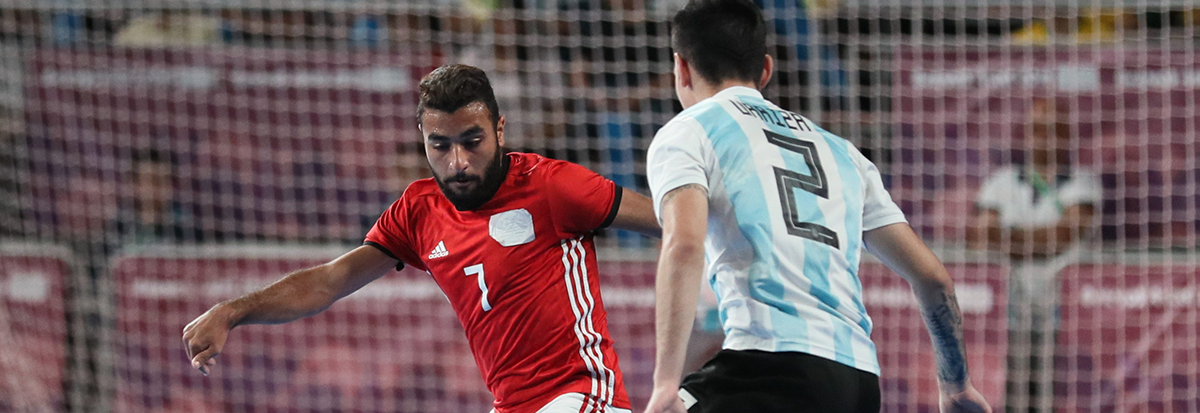
_at_2018_Summer_Youth_Olympics_by_Sandro_Halank%E2%80%930035.jpg)