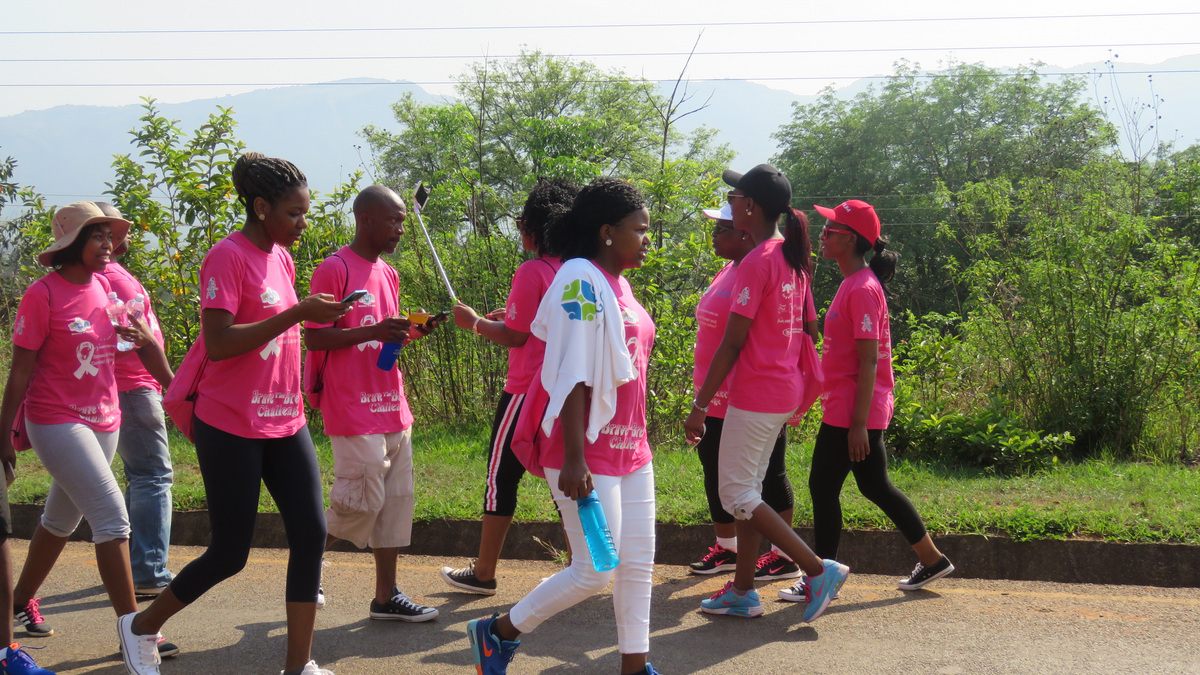
‘Brave the Breast’ walk in Eswatini, 2016 (archive).
A pink poster may advertise a walk, a fundraiser or support for treatment. These do not mean the same thing to participants. Before sharing an announcement, look at its stated aim and the documents that allow you to track delivery.
Identify the stated aim
Raising awareness, directing people to a health service, collecting donations and paying for care are different actions. A walk may draw attention to a cause without providing a medical service. Read the announcement for what it actually says, without adding outcomes it does not claim.
The WHO and National Cancer Institute distinguish screening, which looks for disease in people without symptoms, from diagnosis. An awareness message is not, by itself, screening. That distinction helps explain the words used in sporting campaigns.
Follow the commitment through to the beneficiary
Two names are useful to start with: the organiser and the named beneficiary, if there is one. They may be the same organisation or different ones; that alone says nothing about the quality of the initiative. Information published by the beneficiary offers a perspective beyond the organiser’s announcement. Simply repeating that announcement, however, is not new confirmation.
For fundraising, the mechanism matters as much as the headline amount. Does the announcement promise a fixed sum, a share of entry fees or another funding method? Does it give a deadline? A pledged amount, money collected, a payment and documented receipt are separate stages.
A public report can help track that progression if it specifies what it confirms. A figure announced by the organiser and confirmation of receipt by the beneficiary are not the same evidence. Even a documented payment alone does not measure its effect on access to care.
Leave room for what is unknown
When an announcement mentions funded equipment or treatment, look for the relevant detail to understand the commitment’s scope. If no public document confirms a stage, that stage remains unknown. Missing paperwork proves neither fraud nor health benefits.
Financial transparency and actual access to care are therefore two separate questions. For readers across Africa and its diasporas, this approach can help describe an initiative in terms that match the available evidence, without turning visible generosity into a promise of better health.
SourcesHealth references: WHO, Breast cancer, fact sheet dated 3 July 2026; NCI, Breast Cancer Screening, updated 2 December 2025. Documents checked on 6 October 2026. These separate organisations explain screening; they do not document any particular fundraiser. The framework for reading commitments is an SNA editorial proposal. No real case or testimony is claimed.
Archive photograph: ‘Brave the Breast’ walk in Eswatini, 2016. PillowcaseSWD / Wikimedia Commons, CC BY-SA 4.0. Adapted under the same licence: cropped and resized. This archive image does not depict a 2026 event.
Source: Sport News Africa.
Read the original and its updates on SNA